
How to Create a Gym Membership for Your Mind
Dear Scholars,
Happy Well-Being Day! I hope you use this day for a bit of rest, reflection, and contemplation.
In recent years, I have spent considerable time pondering what college should be for the leaders of the twenty-first century. I always return to a first principle: college must be a place in which one learns to think.
As William Deresiewicz put it in an address at West Point in 2009, “thinking means concentrating on one thing long enough to develop an idea about it.” This kind of concentration is difficult to cultivate in 2026, when seemingly everything around you is designed to shorten your attention span.
At All-Scholar Kickoff in August 2025, I encouraged scholars to build a “gym membership for your mind:” a daily practice and cloistered space that invites the hard work of reading, writing, and thinking without distraction. My grandfather, born in 1915, was a groundskeeper. Because he used his body over the course of every workday, he never considered having a gym membership to keep his body fit and healthy. But I went to school after the invention of personal computers; I spend much of each day seated at one, and I do need a gym membership.
You are in college during a new technological revolution, and I expect that you will need both a gym membership for your body and a “gym membership for your mind” to keep yourself fit and healthy for the leadership journey ahead. Because I did not grow up with a smartphone, I naturally built practices of thinking and contemplation away from screens. In this era, you must be far more intentional in building yours.
Creating such a practice is at the heart of the first episode of “College as It Should Be,” a new Catalyze podcast series we are launching today. Our first guest has modeled such a practice in a way we might all learn from.
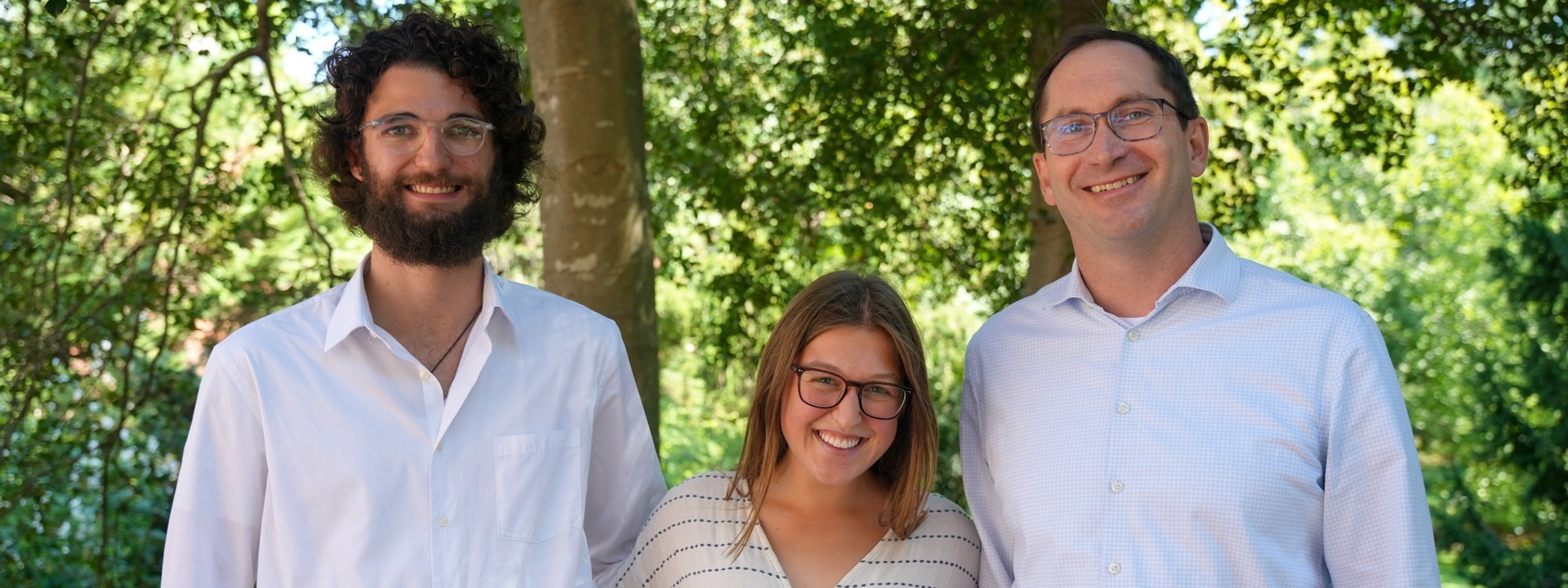
Before Isaac Watkins ’27 came to Carolina, he built a shack in the woods and lived there for months. During his gap year, we received typewritten letters from him describing life in nature, reading books, and contemplating big questions. And by the time he arrived on campus, he had already built a practice of deep, solitary thinking. I think it has made him someone we all admire for the way he steps away from technology to wrestle with big questions about life and the world.
In this conversation with host Ali Slack ’28, Isaac talks about what that experience taught him and, more importantly, how he has carried those practices into his life as a busy college student. Morning routines. Journaling. Making his phone hard to access. Small, practical things that add up to something significant.
I am not suggesting that we all need to build a shack in the woods (though I won’t discourage you if you’re considering it!). But I do think every one of us needs to figure out how to create space for slow thinking, and Isaac has done this in ways that are both inspiring and doable.
You can listen here or wherever you get your podcasts. And let us know what you think!
Today, I invite each of you to set aside ten minutes to think about one question, away from your phone or computer. What might you learn about an idea you’re curious about? What might you notice about an interaction you had that didn’t go the way you expected? How might you build this practice to twenty minutes, and then to an hour, over time?
Contemplatively,
Chris